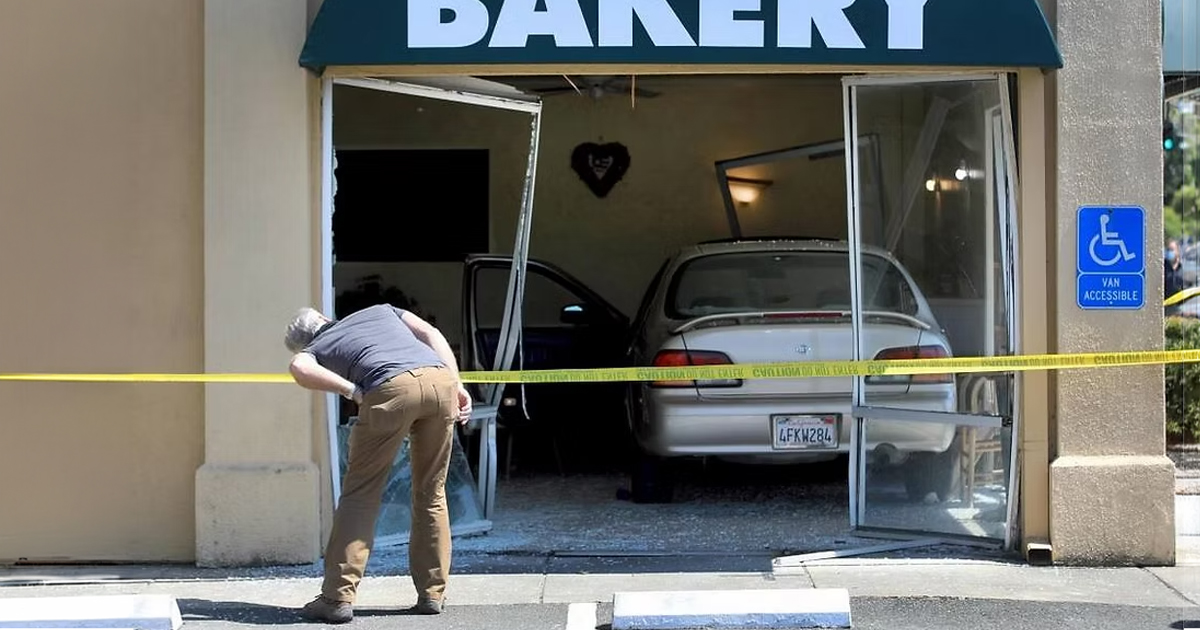
You’ve probably seen the pictures.
A pickup truck through the front window of a retail store.
A vehicle that somehow made it through the glass doors of a pharmacy.
It looks like one of those bizarre accidents that happens once in a blue moon.
But after several vehicle-into-building incidents were reported in our area over the summer, we wanted to DIG deeper. We discovered these kinds of accidents happen much more frequently than people realize.
The Storefront Safety Council estimates that more than 100 vehicles crash into commercial buildings and related structures every day in the United States. Those incidents can involve restaurants, retail stores, offices, shopping centers, post offices and other businesses. The organization estimates that these crashes result in thousands of injuries and more than 2,600 fatalities each year.
And here on the Eastern Shore, we don’t have to look very far to see the potential consequences.
A Local Case Makes the Risk Very Real
In May 2026, the Appellate Court of Maryland issued a decision involving a 2019 crash at a CVS in Salisbury.
A customer was walking out of the store when another customer, attempting to park, failed to stop. The vehicle went through the store’s glass entrance and struck the customer, causing catastrophic injuries.
There was a small concrete wheel stop between the parking space and the building, but there was no bollard or other substantial barrier designed to prevent a vehicle from reaching the entrance.
The court ultimately ruled that the case could proceed, finding there were factual questions about whether the condition was dangerous and whether the store had sufficient knowledge or notice of the potential risk. Importantly, the court rejected the idea that a business necessarily has no responsibility simply because a vehicle had never previously crashed into that particular location.
That’s a pretty important distinction: A business doesn’t necessarily get to wait for the first serious accident before thinking about whether an obvious risk should have been addressed.
How Does Someone Even Crash Into a Building?
Unfortunately, there are plenty of ways.
Sometimes it’s simple driver error — pressing the accelerator instead of the brake.
Sometimes a driver loses control.
Sometimes there’s a medical emergency, impairment, distraction or mechanical problem.
And sometimes, it’s just a very unfortunate combination of circumstances.
Restaurants and other businesses can be particularly vulnerable because customers and employees are often only a few feet away from moving vehicles.
Think about a typical restaurant:
- Parking spaces directly in front of the building
- Large glass windows
- Glass entrance doors
- Outdoor seating
- Customers standing near entrances waiting for tables or takeout
- Employees working near windows or doors
- Drive-thru lanes passing close to pedestrian areas
The design that makes a business convenient and welcoming can also create a significant exposure when a vehicle goes somewhere it isn’t supposed to.
That’s why physical protection matters.
Could a Bollard Really Make a Difference?
Potentially, yes.
Bollards and other protective barriers are designed to keep vehicles from reaching areas where people or vulnerable structures are located.
They’re particularly relevant where parking spaces are positioned directly in front of storefronts — sometimes called “nose-in” parking. Markel notes that these locations are especially vulnerable to pedal-error crashes and identifies bollards and other protective barriers as an important risk-management measure.
In 2012, the Wawa chain of convenience stores completed a massive, multi-year retrofit of hundreds of locations, adding steel-reinforced, concrete-filled bollards along their exterior for storefront crash prevention.
And there’s a bigger lesson here:
Insurance shouldn’t be the first line of defense when a relatively simple risk-control measure could prevent the accident in the first place.
Good risk management isn’t just about buying insurance. It’s about looking around a property and asking:
“What could reasonably go wrong here — and what can we do about it before it does?”
That might mean installing properly rated bollards.
It might mean rethinking parking spaces near entrances.
It could mean protecting outdoor dining areas, pedestrian walkways, drive-thru lanes or other places where people and vehicles come into close proximity.
The goal isn’t to make a property accident-proof. That’s impossible.
The goal is to make it safer.
And Then There’s the Insurance Question
Let’s say the worst happens.
A vehicle crashes through the front of a business.
What happens next?
There isn’t necessarily one insurance policy that simply takes care of everything.
If the driver is legally responsible, their auto liability insurance may respond to damage they caused to the business and injuries to other people — subject to the policy’s limits and the circumstances of the claim. If the driver’s insurance isn’t enough, the business’s own commercial property coverage may become part of the picture, depending on the circumstances and policy provisions.
And that’s just the beginning.
Imagine the crash damages:
- The building
- Windows and doors
- Electrical or plumbing systems
- Interior walls and fixtures
- Equipment
- Furniture
- Inventory or merchandise
Then consider what happens if the building can’t safely open the next morning.
Employees still need to be paid. Customers have to be redirected. Inventory may need to be moved.
Repairs may take weeks. And revenue can disappear while the doors are closed.
That’s where business income and extra expense coverage can become particularly important, assuming the loss is covered and the applicable policy provisions are satisfied.
Then there is the human element.
If customers or employees are seriously injured, the financial consequences can become enormous. Medical expenses, lost wages, legal costs and liability claims can quickly turn an already devastating property loss into a much larger insurance event.
And that’s before we even get into the possibility of a lawsuit alleging that the property itself wasn’t reasonably safe.
Insurance and Risk Management Work Better Together
This is one of those situations where the best insurance conversation isn’t:
“Do you have coverage if a car hits your building?”
It’s:
“What would happen to your business if a car hit your building?”
A good insurance review with your Deeley Client Advisor will consider the property itself, business income, liability exposures, equipment and contents, vehicle exposures, umbrella or excess liability and the particular characteristics of your location.
An equally good risk-management conversation might involve walking the property with fresh eyes.
Where are the parking spaces?
How close are they to the building?
Are there pedestrian areas between moving vehicles and the building?
Are there glass doors or windows directly behind parking spaces?
Are customers likely to congregate in vulnerable areas?
Does the property have protective barriers?
And perhaps most importantly:
If a vehicle left the pavement and traveled 20 feet in the wrong direction, where would it end up?
That question can reveal risks that aren’t obvious when we’re simply walking through a property as customers.
The Accident You Never Thought Would Happen
Nobody buys a commercial insurance policy expecting a car to come through the front wall.
That’s precisely why these incidents are worth talking about.
The unusual doesn’t mean the impossible.
And a risk doesn’t have to happen every day at your business to deserve some attention.
The Salisbury CVS case is a good reminder of that. So are the hundreds of storefront crashes that happen across the country every week.
We can’t prevent every driver from making a mistake. But businesses can take steps to protect their people, their property and their ability to keep operating when something unexpected happens.
That’s what good insurance and good risk management are supposed to do — work together before the unexpected becomes a very expensive reality.
At Deeley Insurance Group, we believe insurance is about more than checking boxes on a policy. It’s about understanding how our clients actually operate, identifying the things that could go wrong and helping them make informed decisions about how to protect what they’ve built.
Because the best claim is the one that never happens.
Reach out to the friendly risk management experts at Deeley today. Call or text 410.213.5600.