

Spring Property Check-In
After a long, tough winter, it’s the perfect moment to take a closer look at our properties.
Snow, ice, plowing, and wind can leave behind issues that aren’t always obvious at first glance. Now that the plow damage, fallen branches, and debris are being cleaned up, it’s time for a thorough post-winter inspection to ensure everything held up as expected.
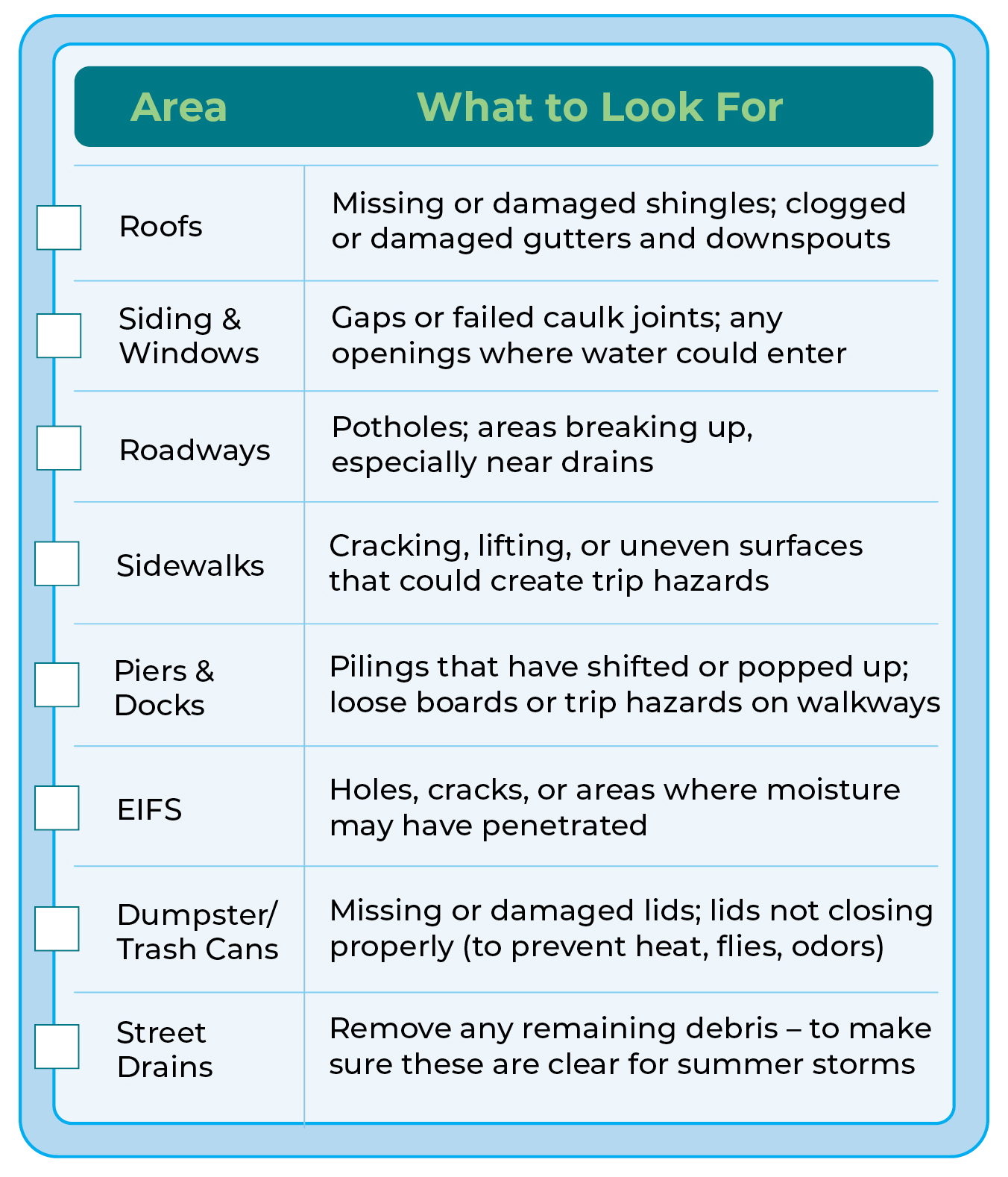
Below is a Quick Double-Check List to guide your spring walkthroughs.
Why PREVENTIVE Maintenance Works
Preventive maintenance is proactive. It follows manufacturer or industry recommended schedules for maintenance.
This approach:
- Extends the life of roofs, mechanical, electrical, and building components
- Improves efficiency, reducing energy waste
- Prevents safety hazards by identifying issues early
- Reduces downtime and avoids emergency repairs
- Protects building surfaces and structural elements from deterioration
Why REACTIVE Maintenance Falls Short
Reactive maintenance seems appealing because it requires no upfront investment and only costs money when something breaks. Regular maintenance can extend the life of many assets by years.
The coastal environment can shorten the manufacturers’ estimated life of building components. Without preventive care, equipment fails sooner, often at inconvenient times, leading to:
- Emergency repair costs
- Extended downtime of critical systems
- Operational disruptions
- Collateral damage
- Difficult budgeting
- Insurance claims
Reactive maintenance is appropriate only for low cost, non critical items.
Roof replacement and inspections remain the best way to positively impact insurance premiums.
Talk to your agent about all preventative maintenance your community has performed this year.
For more seasonal insurance tips, reach out to Melissa Esham, Deeley’s Community Association Advisor. Call or text her at 410.213.5579 today!