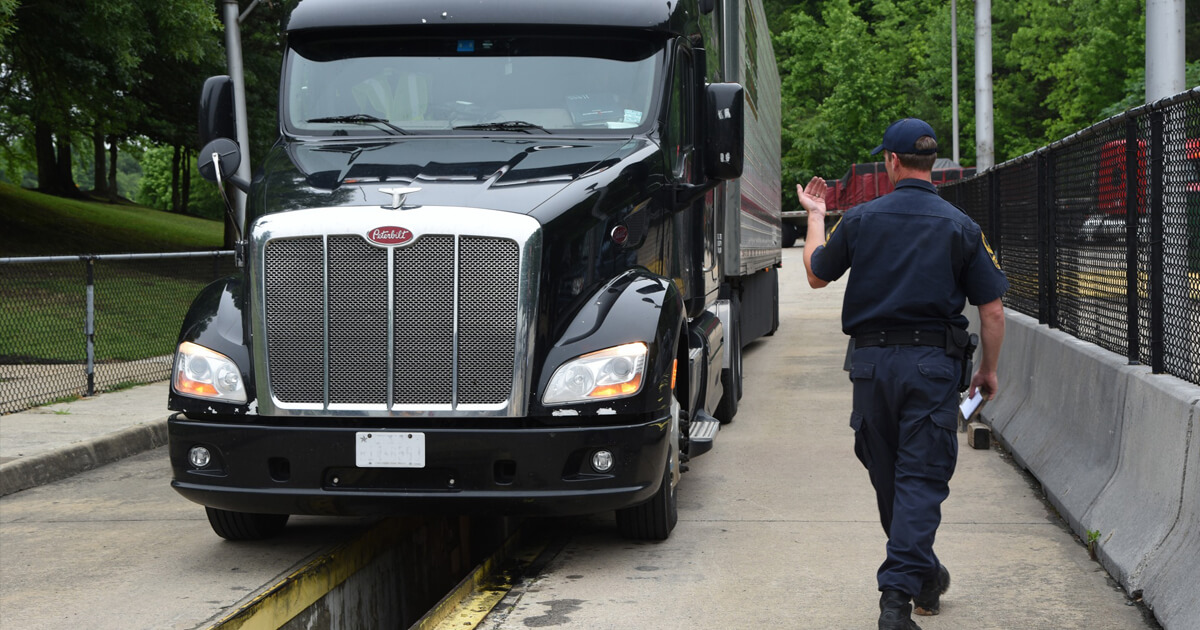
The Commercial Vehicle Safety Alliance (CVSA) recently announced that this year’s International Roadcheck is scheduled for May 12-14, 2026. The International Roadcheck is an annual, three-day enforcement initiative that emphasizes the importance of commercial motor vehicle (CMV) and driver safety through a blitz of high-visibility roadside inspections across North America.
During the event, enforcement officials conduct the following North American Standard (NAS) inspections on vehicles:
- Level I inspections consist of 37 steps, including an examination of CMVs’ mechanical fitness and drivers’ operating requirements. This is the most common type of inspection during the event.
- Level II inspections generally include everything that can be checked without physically getting under the vehicle.
- Level III inspections include a review of driver requirements, such as a commercial driver’s license, vehicle documentation, cargo, a record of duty status (RODS) and other requirements.
- Level V inspections are equivalent to the Level I NAS inspection, except drivers are not present. These normally occur after an incident or arrest.
For annual inspections, the CVSA also emphasizes specific categories of driver and vehicle violations.
Driver Inspection Focus
During the driver portion of a roadside inspection, inspectors evaluate the driver’s qualifications, commercial driver’s license status, RODS, medical examiner’s certificate, seat belt compliance, skill performance evaluation (SPE) certificate (if applicable), and status in the Drug and Alcohol Clearinghouse. Inspectors also assess the driver for any signs of alcohol or controlled substance impairment. If a driver out-of-service (OOS) violation is identified, the inspector will place the driver out of service, prohibiting further operation of the CMV until the violation is resolved.
A primary enforcement emphasis this year is electronic logging device (ELD) tampering, falsification or manipulation. During inspections, officials review the driver’s duty status records and examine ELD data for false entries, improper edits or indications of manipulation.
While some inaccurate ELD entries may stem from a misunderstanding of federal regulations or applicable exemptions, others may be intentional attempts to conceal hours-of-service (HOS) violations or unrecorded driving time. Inspectors will pay close attention to records that appear to have been altered or manipulated without any visible indication of edits.
In the prior year, falsification of RODs was the second most-cited driver violation, totaling 58,382 violations. Additionally, five of the top 10 driver violations were related to HOS compliance or ELD requirements.
Vehicle Inspection Focus
During the vehicle portion of a roadside inspection, inspectors examine critical safety components, including the brake system, cargo securement, coupling devices, driveshaft components, driver’s seat, fuel and exhaust systems, frame, lighting, steering, suspension, tires, wheels and rims, hubs and windshield wipers. For motor coaches, buses and other passenger-carrying CMVs, inspectors also review emergency exits, seating and electrical systems in the engine and battery compartments.
If OOS violations are identified, the vehicle will be placed out of service and cannot be operated until the violations are corrected.
Vehicles that pass a Level I or Level V Inspection without any critical violations may receive a CVSA decal, which is valid for up to three months. This decal indicates to enforcement personnel that the vehicle was recently inspected and did not have any OOS violations at the time of inspection.
This year’s enforcement emphasis is cargo securement (last year’s focus was proper tire maintenance). Improperly secured cargo can significantly impact a vehicle’s stability and maneuverability. Unsecured loads may shift, fall or become dislodged, creating serious roadway hazards and increasing the risk of crashes.
In 2025, inspectors issued 18,108 violations for cargo not being secured to prevent leaking, spilling, blowing or falling. An additional 16,054 violations were issued for failing to properly secure dunnage and related materials.
Takeaway
Employers should ensure their drivers and CMVs comply with all regulations to prepare for the CVSA International Roadcheck.
For more commercial driving resources and transportation insurance solutions, contact the friendly, local experts at Deeley Insurance Group today. Call or text us at 410.213.5600.