
Nutrition is the foundation of health, influencing disease prevention and overall well-being. Dietary habits can shape long-term health outcomes. The Dietary Guidelines for Americans, 2025-2030, reflects the latest in nutrition science and public health needs, marking what public health officials describe as the most “significant reset” of federal nutrition policy in decades.
At its core, the new dietary guidance emphasizes a simple directive: “Eat real food.”
The 2025-2030 guidelines define real food as whole, nutrient-dense and naturally occurring, placing it back at the center of Americans’ diets. Here are some major changes to the guidelines from the previous recommendations:
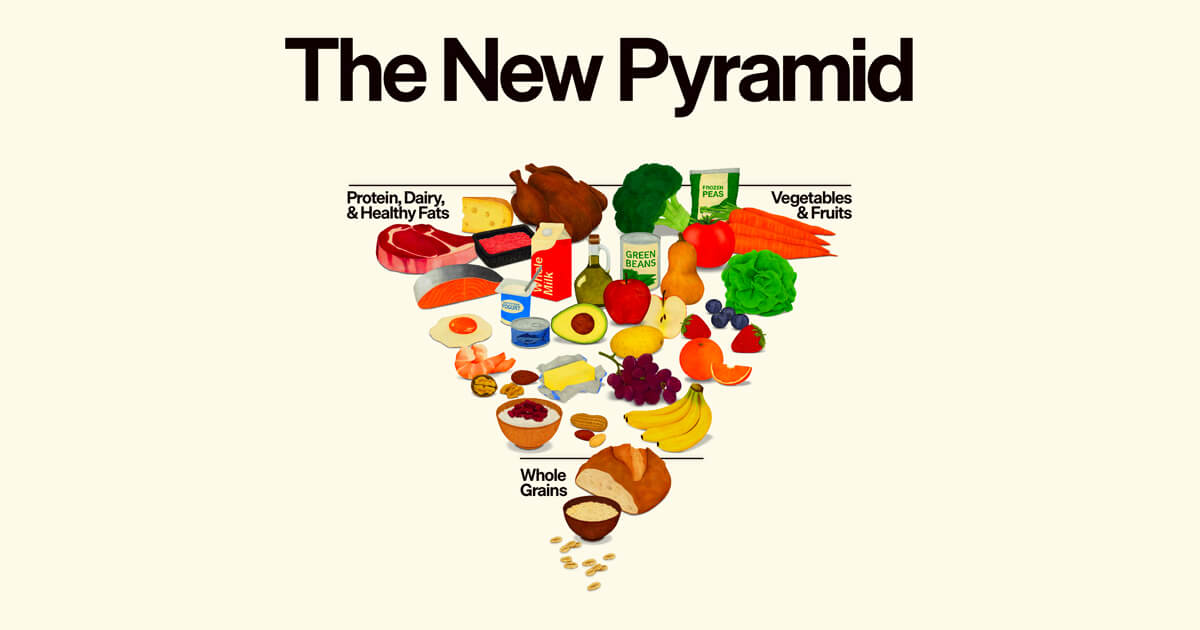
- The New Pyramid—The latest update features an inverted pyramid that places meats, cheese and vegetables in the widest part at the top, reversing a long-standing visual representation of the American diet and shifting away from the circular MyPlate image. This flexible framework is designed to guide better choices, rather than dictating specific meals.
- Ultra-processed foods (UPFs)—For the first time, the guidelines specifically call out UPFs. Americans are advised to avoid packaged and ready-to-eat foods that are salty or sweet (e.g., chips, cookies and candy) and limit foods and beverages with artificial flavors, dyes, preservatives and sweeteners.
- Protein—The new guidelines prioritize protein at every meal, with a goal to get 1.2 to 1.6 grams per kilogram of a person’s body weight daily, nearly double the previous advice. Americans are encouraged to obtain their protein from both animal sources (e.g., eggs, poultry, seafood and red meat) and plant-based sources (e.g., beans, peas, lentils, legumes, nuts, seeds and soy).
- Dairy—The updated version prioritizes full-fat dairy with no added sugars, marking a major shift from the long-standing recommendation for fat-free or low-fat milk and yogurt.
- Added sugars—The guidelines note that no amount of added sugar is healthy. As such, adults should limit their intake to no more than 10 grams per meal, and no amount of added sugar is suitable for children aged 5 to 10.
- Alcohol—The general recommendation now is to simply limit alcohol consumption without providing exact figures.
To learn more about the new dietary guidelines, visit RealFood.gov. Individuals should consult with their health care provider for personalized guidance.